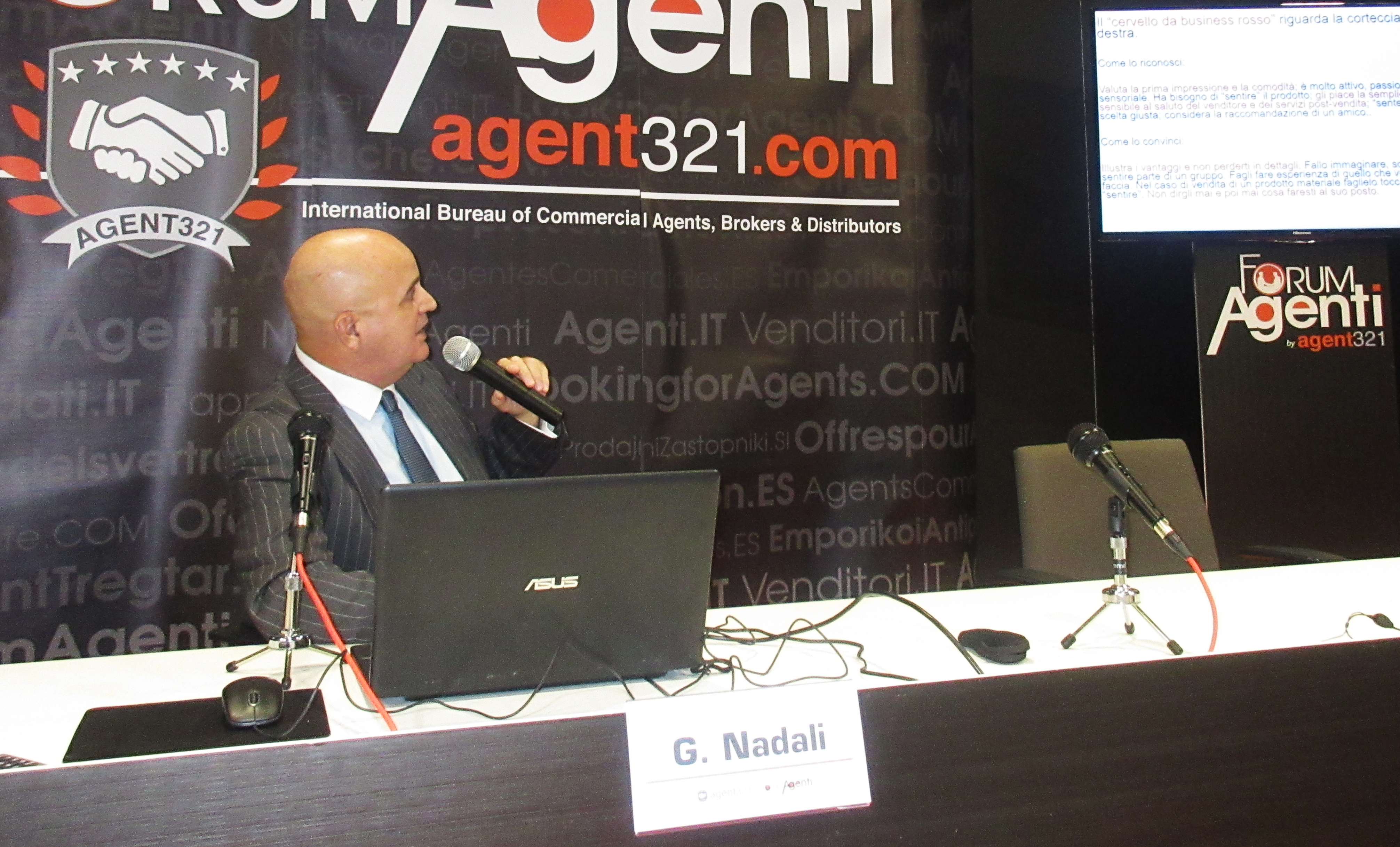
Full immersion training day
The first part of the course (from 09.00 to 13.00) aims to make known the right words and winning strategies for selling.
An ethical and efficient communication thinks first of the benefits for the customer, listens to him, understands his expectations and doubts, identifies with his problems. Nor should the price of the proposed products change, because it makes the customer perceive it in a different way! This is only possible by training yourself to listen and use the right words. Not to bring home a sale at all costs, but to really help the customer with his needs. For example, if the customer objects “I'm not convinced, it's too expensive”, the hasty and unethical seller's response is: “Then I'll offer you a discount and this gift”. Negotiation over! The correct winning and ethical answer is: 'What exactly does not convince you?', Or 'Expensive compared to what?' We absolutely must listen to understand, not to respond! There are also many constructive words and many other destructive ones. We don't realize it, but it is. Let's find out together!
In the first part of the training day we examine the 12 rules for communication for salespeople and businessmen. Effective communication means winning! We will then examine the effective words for sale and the destructive phrases and words ...
We will then move on to the “Seller's Wheel”, to be filled in in the classroom to outline our starting situation and the desired one in the near future.
Your (linguistic) communication can positively influence your Client (programming) by activating particular reactions of his brain (neuro). We will use NLP techniques *. It is not magic, but effective communication with successful communication models widely proven to be successful.
Already only in this first part (the morning) the participants will acquire models which - if applied correctly - will allow them to increase their sales by 20 to 30% in three months.
LUNCH BREAK (from 13.00 to 15.00)
The second part of the course (From 15.00 to 19.00) aims to introduce all the strategies and rules for efficient communication.
Communicating means transmitting information and emotions. It is impossible not to communicate. In the sense that it is impossible not to transmit information about us, even unintentionally. Even now with this text. Whenever we are in a social situation, we are always and in any case the source of an information flow (a broadcaster), regardless of our intentionality, the effectiveness of the communication act or mutual understanding. We are always a source of information for those who observe us. Then it pays to do it right! Often you have excellent contents, but you are unable to know how to convey them in order to be understood because the interlocutor has another inner 'map' with which he interprets reality. According to Cyril Northcote Parkinson 'The void created by a failure in communication will soon be filled with gossip, misrepresentation, absurdity and poison'. Inform, express a desire, urge, control ... The goal of any effective communication is to deal with change, both to avoid it and to provoke it. Communication is the tool with which relationships are established and developed. Knowing how to listen, putting the interlocutor at ease, knowing how to recognize non-verbal signals, knowing how to convince one's ideas is essential in private life to be successful, but even more so in the world of work where competition is decisive for those who know how to carry on. their ideas effectively and persuasively. Many times this marks the line between the success and failure of major business deals. Having a good product is not enough, it must be perceived as such and the need must be generated. It is not enough to have authority, you must make it perceived as a precious guide. It is not enough to know how to speak, you need to have charisma. We were taught to speak, but no one has ever taught effective communication. This is an art with its own rules that must be learned and made your own. Not to mention that verbal communication is only 7% of what we communicate to others. The course also analyzes various rules of Neuro Linguistic Programming * (NLP or NLP, in the original English). It is a technique invented in the 1970s by psychologist Richard Bandler and linguist John Grinder in the United States. Bandler and Grinder observed the behaviors of the most successful people and created a modeling of reference to be applied in every situation in life. This technique is used today by sportsmen, communicators, business people, trainers, and ordinary people to have successful results.